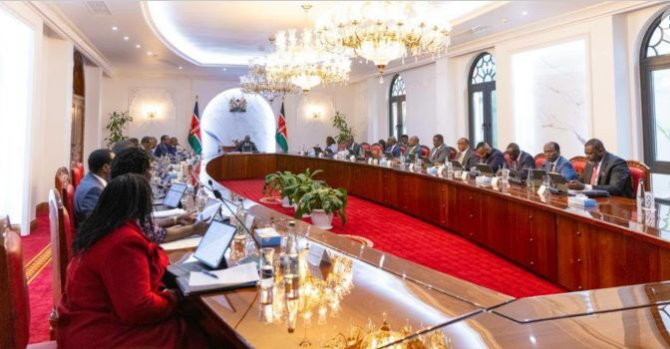
According to the Cabinet, the investment is expected to strengthen access to justice, improve judicial efficiency and enhance investor confidence by expanding and modernising the country’s judicial infrastructure.
The approval comes nearly two years after the Judiciary publicly appealed for the construction of a new Supreme Court building, arguing that the current premises are no longer adequate to meet the institution’s constitutional role.
In 2024, Judiciary Registrar Winfridah Mokaya told President William Ruto that the Supreme Court building had outlived its functionality, noting that its design no longer supports the operational needs of Kenya’s highest court.
At the time, the Judiciary disclosed that it had already launched an architectural design competition to develop concepts for a modern Supreme Court building that would reflect the stature and responsibilities of the apex court under the Constitution.
Nairobi Governor Johnson Sakaja also revealed that discussions were underway to allocate county land adjacent to City Hall for the proposed Supreme Court complex, although the government has yet to officially confirm the project’s location.
Besides the new Supreme Court complex, the Judicial Performance Improvement Project Phase II will fund a dedicated Court of Appeal building, a consolidated complex for tribunals and Judiciary administration, and a new Kenya Judiciary Academy to strengthen judicial training.
The World Bank-backed programme is expected to build on earlier judicial reforms by improving court infrastructure, enhancing case management and expanding access to justice across the country.
The latest approval is expected to transform Kenya’s judicial infrastructure, replacing facilities that have been operating from buildings constructed more than 95 years ago.